
Why is cervical cancer screening important?
Cervical cancer is a cancer for which risk can be effectively reduced and prevention supported through HPV vaccination together with screening according to appropriate recommendations.
Most cervical cancers are associated with persistent infection with high-risk Human Papillomavirus (HPV) over a long period of time.
HPV is a common virus that can be transmitted through sexual contact. Most HPV infections clear naturally and do not progress to cancer. However, in some people, high-risk HPV may persist for a long time and cause abnormal changes in cervical cells, which may later develop into precancerous lesions and cervical cancer.
The process from HPV infection to precancerous lesions and cancer often takes many years. This creates an important period in which abnormalities can be detected and monitored before they progress to cancer.
Therefore, cervical cancer screening is not intended only to find cancer. It also helps identify high-risk HPV infection and abnormal cells at the precancerous stage so that appropriate monitoring or care can be provided.
What is cervical cancer?
The cervix is the lower part of the uterus that connects to the vagina.
Cervical cancer occurs when cells in the cervix change and grow abnormally in an uncontrolled manner. In some cases, the cancer can invade nearby tissues or spread to other organs.
Most cervical cancers are associated with persistent high-risk HPV infection over a long period of time.
Because progression from HPV infection to precancerous lesions and cancer often takes many years, screening plays an important role in identifying abnormalities at a stage when they can still be monitored or treated.
Where does cervical cancer develop?
An important area of the cervix associated with abnormal changes is called the Transformation Zone, which is the junction between two types of epithelial cells:
- Squamous cells, or flat epithelial cells
- Glandular cells
The Transformation Zone is an area where cells naturally change and is also a common location for abnormal cells and precancerous lesions.
Screening methods such as the HPV Test and cervical cytology (Cervical Cytology/Pap Test) therefore play a role in detecting high-risk HPV infection and abnormal cervical cells.
How many types of cervical cancer are there?
There are several types of cervical cancer. Common types include:
1. Squamous Cell Carcinoma
This is the most common type. It develops from squamous epithelial cells of the cervix and often originates in the Transformation Zone.
2. Adenocarcinoma
This develops from glandular cells in the endocervical canal.
This type has different pathological characteristics from Squamous Cell Carcinoma, and screening also plays a role in identifying related abnormalities.
3. Other types of cervical cancer
Other, less common types of cervical cancer also occur. Determining the type of cancer requires pathological examination and assessment by a medical specialist.
What are precancerous changes?
Before cancer develops, cervical cells may undergo abnormal changes known as Precancerous Changes or precancerous lesions.
These conditions are not yet cancer, but some levels of abnormality may have the potential to progress to cancer if they are not appropriately monitored or managed.
Doctors may use the term Cervical Intraepithelial Neoplasia (CIN) to describe levels of cellular abnormality, including:
- CIN 1: Low-grade abnormality. In many cases it can regress or resolve on its own, so follow-up may be selected according to risk level and medical advice.
- CIN 2: A higher-grade abnormality. Management may differ according to age, risk, accompanying test results, and individual factors.
- CIN 3: A high-grade abnormality with a greater risk of progression to cancer. It generally should be evaluated and managed according to a doctor’s recommendations.
Detecting precancerous lesions through screening is therefore important because it allows monitoring or treatment before the abnormality progresses to cancer.
Causes and risk factors for cervical cancer
Persistent high-risk HPV infection is the most important factor associated with the development of cervical cancer.
HPV is a common virus that can be transmitted through sexual contact. Most people who become infected are able to clear the infection naturally.
However, if high-risk HPV persists for a long time, it may cause changes in cervical cells and, in some people, progress to precancerous lesions and eventually cancer.
Certain factors may increase the risk of cervical abnormalities or cervical cancer, such as:
- Persistent high-risk HPV infection
- Smoking
- Immunodeficiency
- Factors that increase the likelihood of exposure to or infection with HPV
- Not receiving screening according to recommendations
Long-term use of hormonal contraceptives may be associated with a small increase in cervical cancer risk in some contexts. However, this association should be considered together with other factors, and hormonal contraception should not be stopped without consulting a doctor.
Symptoms of cervical cancer
Early-stage cervical cancer often has no clear symptoms. This is one of the important reasons screening plays a role in detecting abnormalities before symptoms develop.
As the disease becomes more advanced, possible symptoms include:
- Abnormal bleeding between menstrual periods
- Bleeding after sexual intercourse
- Vaginal bleeding after menopause
- Abnormal vaginal bleeding
- Unusually heavy vaginal discharge
- Vaginal discharge with an unusual odor
- Pelvic or lower abdominal pain
- Pain during sexual intercourse
These symptoms do not always mean cervical cancer and can also be caused by other conditions.
If abnormal symptoms occur, a doctor should be consulted to determine the appropriate cause. Screening alone should not be awaited.
Cervical cancer prevention
Cervical cancer is a cancer for which risk can be effectively reduced. Important approaches include:
1. HPV vaccination
The HPV vaccine helps protect against HPV types associated with several cancers, including cervical cancer.
The vaccine provides the greatest benefit when given before a person is likely to be exposed to HPV. However, some adults may still benefit from vaccination. A doctor should be consulted to assess individual suitability.
HPV vaccination cannot replace cervical cancer screening.
2. Cervical cancer screening
Screening helps detect high-risk HPV infection or abnormal cervical cells before they develop into cancer.
Screening methods include:
- HPV Test: Detects high-risk HPV types associated with cervical cancer
- Pap Test (Pap Smear): Detects abnormal cells in the cervix
- HPV/Pap Co-test: Tests for HPV together with cervical cytology in individuals for whom combined testing is appropriate according to screening guidelines
The appropriate test method and interval may differ according to age, previous screening history, prior test results, risk factors, and the medical guidelines being used. A doctor should therefore be consulted to select the method most appropriate for each individual.
3. Avoid smoking
Smoking is associated with an increased risk of abnormal cervical cells and cervical cancer. Avoiding or quitting smoking is therefore another way to reduce modifiable risk factors and support overall health.
Why is screening important?
A key benefit of cervical cancer screening is the ability to identify high-risk HPV infection or abnormal cells before symptoms develop.
An important point to understand is:
HPV Positive does not mean cancer
A positive high-risk HPV result means that a type of HPV associated with cervical cancer has been detected, but most HPV infections do not progress to cancer.
If HPV or abnormal cervical cells are detected, a doctor will consider the person’s risk together with age, previous test history, and other results to determine appropriate follow-up, additional testing, or treatment.
When a precancerous lesion is found at an early stage, it can be monitored or treated according to the level of abnormality, helping reduce the chance that the lesion will progress to cervical cancer.
Knowing your risk and detecting abnormalities before symptoms develop are therefore central to cervical cancer prevention.
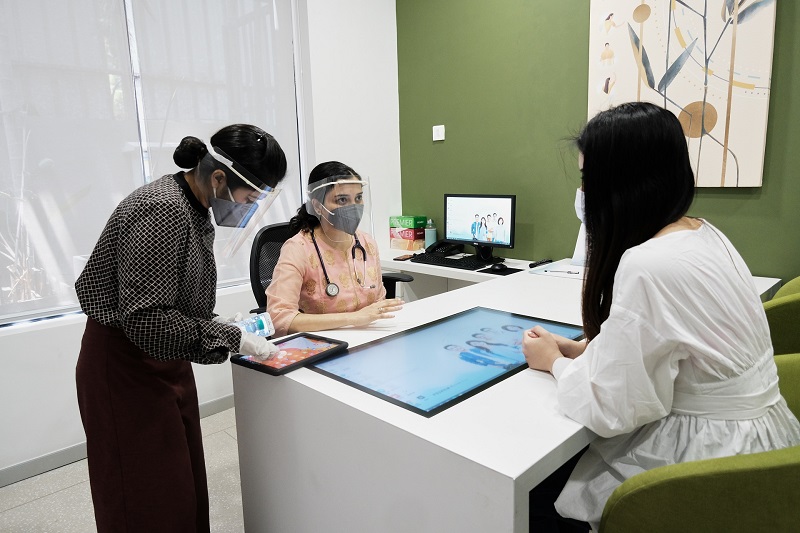
Cervical cancer screening at NURA Bangkok
At NURA Bangkok, we focus on preventive health care and screening that is appropriate for each individual.
Cervical cancer screening may include an HPV Test and Pap Smear, or combined testing in appropriate individuals. The choice of test should consider age, medical history, previous screening history, and individual risk factors.
Test results can help doctors assess the risk of high-risk HPV infection and abnormal cervical cells and determine appropriate follow-up or additional testing.
An abnormal screening result does not mean cancer. In some cases, additional evaluation may be required, such as a gynecological examination, further HPV testing, colposcopy, or biopsy, according to the doctor’s clinical judgment.
Good health starts with knowing early
Cervical cancer may not cause symptoms in the early stages, but in many cases high-risk HPV infection and abnormal cells can be detected before they progress to cancer.
HPV vaccination together with screening according to recommendations is an important approach to reducing the risk of cervical cancer.
Do not wait for symptoms before beginning to care for your health. Appropriate screening can help identify abnormalities at an early stage and support suitable follow-up or care planning.
Know your risk, detect abnormalities early, and maintain continuous health care
Note: This information is provided for health education and cannot replace diagnosis or medical advice. Each screening method has different indications, benefits, and limitations. An abnormal screening result does not always mean cancer and may require additional testing or specialist medical assessment according to the needs of the individual.